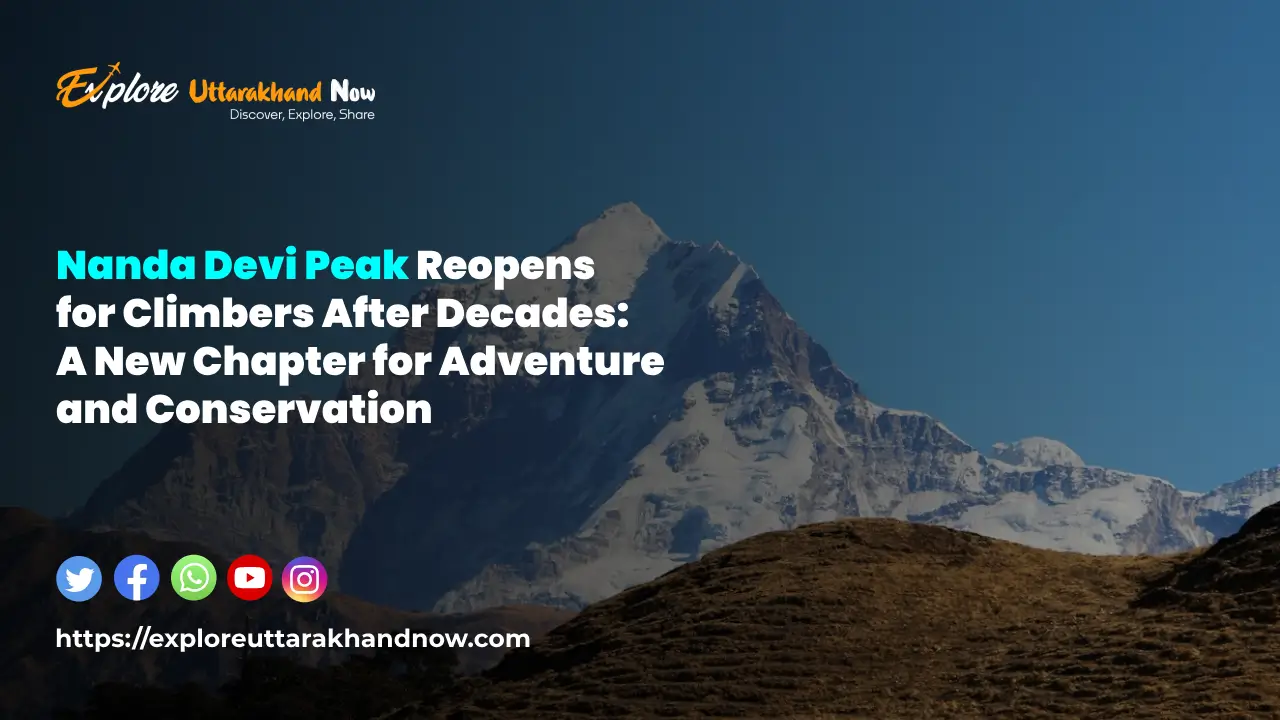
After nearly four decades of closure, the majestic Nanda Devi Peak in Uttarakhand, India, is set to welcome mountaineers once again. The announcement, stirring excitement among adventure enthusiasts and local communities alike, marks a significant moment for one of India’s most iconic natural landmarks. Towering at 7,816 meters, Nanda Devi—India’s second-highest peak—has long been a symbol of spiritual reverence and mountaineering allure. But why was it closed for so long, and what does this reopening mean for climbers, the local economy, and the fragile Himalayan ecosystem? Let’s dive into the story. A Peak Steeped in History and Myth Nanda Devi, nestled in the heart of the Garhwal Himalayas, is more than just a mountain. For the local Bhotiya community, it’s a sacred deity, revered as the goddess Nanda Devi, whose presence is celebrated in festivals like the Nanda Devi Raj Jat Yatra. The peak, surrounded by a ring of towering summits in the Nanda Devi National Park, was declared a UNESCO World Heritage Site in 1988 for its breathtaking landscapes and rich biodiversity. Its rugged terrain, glacial basins, and rare species like the snow leopard and Himalayan musk deer make it a natural wonder. Mountaineering on Nanda Devi has a storied past. The first recorded attempt to explore the Nanda Devi Sanctuary came in 1883 by W.W. Graham, though it was Eric Shipton and H.W. Tilman’s 1934 expedition through the treacherous Rishi Ganga Gorge that opened the inner sanctuary to the world. By 1936, Tilman and N.E. Odell summited the peak, cementing its place in mountaineering lore. However, the peak’s allure wasn’t without controversy. In the 1960s, a secretive CIA-India mission to place a nuclear-powered monitoring device on the summit went awry when the device was lost, raising environmental concerns that lingered for decades. Why Was Nanda Devi Closed? In 1983, the Indian government closed Nanda Devi Peak and its sanctuary to climbers and locals to protect its fragile ecosystem. The decision came after years of environmental degradation from unregulated trekking, grazing, and littering. By the late 1970s, conservationists noted significant damage to the park’s pristine habitats, home to over 312 floral species and endangered fauna. The closure aimed to preserve the park’s biodiversity, with the sanctuary declared a game sanctuary in 1939 and later a national park in 1982. The lost nuclear device, believed to have slid into a glacier, further fueled concerns about potential pollution, though expeditions to retrieve it were unsuccessful. “The closure was a tough but necessary call,” says Dr. Anjali Sharma, a Himalayan ecologist based in Dehradun. “Nanda Devi’s ecosystem is unique, with species found nowhere else. Unchecked human activity was threatening its delicate balance.” A New Era for Mountaineers The decision to reopen Nanda Devi Peak for mountaineering, announced in July 2025, follows years of advocacy from the Indian Mountaineering Foundation and local communities. Posts on X reflect the buzz, with users like @NewIndianXpress noting that the move aims to boost adventure tourism in Uttarakhand after a 40-year hiatus. The reopening will allow a limited number of climbers—capped at 500 annually—to ascend under strict regulations, ensuring minimal environmental impact. For mountaineers, this is a dream come true. “Nanda Devi is the holy grail of Himalayan climbing,” says veteran mountaineer Arjun Vajpai, who summited Everest at 16. “Its inaccessibility and sheer scale make it a bucket-list peak. This reopening is like unlocking a time capsule.” Climbers will need permits from the Forest Department in Joshimath, with foreign nationals requiring additional clearance from the Ministry of Home Affairs in Delhi. The trek to the base camp, starting from Lata Village, 25 km from Joshimath, promises stunning views of peaks like Trishul and Dunagiri, but it’s not for the faint-hearted. The terrain is steep, and altitude sickness is a real risk, requiring climbers to be well-prepared. Boosting Local Tourism The reopening is a boon for Uttarakhand’s economy, particularly for towns like Joshimath and villages like Lata. These areas, gateways to the Nanda Devi National Park, rely heavily on tourism. Local guide Dinesh Bisht, who has led treks to nearby Kuari Pass, is optimistic: “This will bring jobs for guides, porters, and homestay owners. But we need to ensure tourists respect our mountains and culture.” The Nanda Devi Interpretive Trek, a community-led initiative, already offers a glimpse into the region’s Bhotiya heritage, with stops at cultural sites like the 12th-century Nanda Devi temple in Lata. Tourism officials estimate that adventure tourism could increase by 20% in the region, drawing international climbers and trekkers. Nearby attractions like the Valley of Flowers and Hemkund Sahib will also benefit from the influx. However, locals stress the need for sustainable tourism. “We want visitors to enjoy Nanda Devi’s beauty, not destroy it,” says Lata village elder Gaura Devi, echoing her community’s Chipko Movement legacy of environmental activism. Balancing Adventure and Conservation Environmentalists, while cautiously supportive, emphasize the need for strict oversight. The park’s core zone, reopened for limited eco-tourism in 2003, has seen successful cleanup efforts, with over 1,000 kilograms of litter removed in past expeditions. The 2021 Rishiganga flood, triggered by a glacial lake outburst, underscored the region’s vulnerability to climate change. “We must monitor climber impact closely,” Dr. Sharma warns. “The park’s glaciers and wildlife can’t afford another setback.” To address this, authorities have outlined measures like mandatory guides, designated camping zones, and waste management protocols. The Indian Mountaineering Foundation’s proposal to Tourism Secretary Dheeraj Garbyal includes plans for regular ecological surveys to ensure the park’s health. The reopening also aligns with India’s broader push to promote Himalayan adventure tourism while preserving its natural heritage. What’s Next for Nanda Devi? As preparations ramp up, the global mountaineering community is abuzz with anticipation. For many, climbing Nanda Devi is a chance to connect with a peak that blends raw wilderness with spiritual significance. For Uttarakhand, it’s an opportunity to showcase its natural and cultural treasures to the world. But the success of this reopening hinges on a delicate balance—honoring the mountain’s sanctity, protecting its ecosystem, and embracing sustainable adventure. Whether
Uttarakhand Panchayat Elections 2025: Full Schedule & Voting Process
The 2025 Uttarakhand Panchayat Elections are a vital part of grassroots democracy, empowering rural communities to elect leaders who address local needs like roads, water, and schools. This democratic process will strengthen village governance across Uttarakhand. These elections aren’t just about casting votes; they’re about empowering rural communities to shape their future. From building better infrastructure to ensuring local voices are heard, Panchayats are the backbone of rural development in this Himalayan state. In this blog, we’ll dive into the key details—election dates, voter lists, seat breakdowns, and the voting process—while sharing stories of why this matters. Whether you’re a voter in Dehradun or just curious about Indian democracy, let’s explore what makes these elections a game-changer for Uttarakhand’s 7,485 Gram Panchayats and beyond. Uttarakhand Panchayat Chunav 2025: Key Highlights Uttarakhand’s Panchayati Raj system operates on a three-tier structure: Gram Panchayats at the village level, Kshetra (Block) Panchayats at the block level, and Zila Panchayats at the district level. Together, they tackle everything from local infrastructure to education and healthcare. In 2025, the elections will fill approximately 55,572 Gram Panchayat member seats, 7,485 Pradhan (village head) positions, 2,984 Block Development Committee (BDC) members, and 356 Zila Panchayat members across 13 districts. The Bharatiya Janata Party (BJP), Congress, and independents are expected to dominate, with the BJP leveraging its 2025 municipal election landslide (winning 10 of 11 municipal corporations) to push for rural control. Local issues like water scarcity and unemployment often drive campaigns, and candidates like Anita from Chamoli, a 2020 winner, show how women are stepping up despite challenges like limited resources. The stakes are high—voters are choosing leaders who’ll directly impact their daily lives. Uttarakhand Panchayat Chunav 2025 Date The State Election Commission, Uttarakhand, announced that the 2025 Panchayat Elections will be held in two phases: July 24 for the first phase and July 28 for the second, with vote counting on August 2. Nomination papers were filed from July 2 to July 5, scrutinized on July 9, and withdrawals allowed until July 11. This timeline aligns with the five-year cycle mandated by the 73rd Constitutional Amendment, as the last elections occurred in 2019. Voter registration closed on June 30, 2025, giving residents ample time to update details. For comparison, the 2019 elections saw a 69.59% voter turnout, and officials are pushing for even higher participation this time. If you’re in Kichha or Narendranagar, note that your elections are delayed to align with municipal polls later in 2025. Mark your calendars and get ready to vote. Uttarakhand Panchayat Chunav 2025 Voter List Checking your name on the voter list is crucial to ensure you can vote on election day. Visit the State Election Commission’s website (sec.uk.gov.in) to download the 2025 Panchayat voter list or use the toll-free helpline 1950 for assistance. You can also visit your local Block Development Office or contact booth-level officers to verify your details in person. For online checks, enter your name, father’s/husband’s name, and constituency details on the SEC portal. The deadline for corrections or additions to the voter list was June 30, 2025, so if you missed it, reach out to your local election office ASAP to resolve issues. In 2019, over 30 lakh voters participated, and this year’s updated rolls aim to include new voters, especially youth. Stories like Rajesh from Nainital, who fixed his voter ID error just in time, show why checking early matters. Uttarakhand Panchayat Chunav 2025 Seat List The 2025 elections cover a massive number of seats across Uttarakhand’s three-tier system. Gram Panchayats will elect 55,572 members and 7,485 Pradhans, while Kshetra Panchayats will see 2,984 BDC members, and Zila Panchayats will elect 356 members. Seats are divided into reserved (for women, SC/ST, OBC) and unreserved categories, with roughly 33% reserved for women under the Uttarakhand Panchayati Raj Act. Major districts like Dehradun (754 Gram Panchayats), Haridwar (306), and Nainital (447) account for significant shares, but even remote areas like Pithoragarh have a say. To find your constituency or ward, check the SEC website or visit your local Panchayat office, where voter lists and seat details are displayed. This setup ensures representation from every corner, giving voices to farmers like Meena in Pauri Garhwal, who’s running to improve village sanitation. Voting Process for Uttarakhand Panchayat Elections 2025 Voting in the 2025 Panchayat Elections is straightforward but requires preparation. On July 24 or 28, head to your designated polling station with a valid ID—Voter ID is mandatory, though Aadhaar or other government-issued IDs may be accepted for verification. At the booth, your name will be checked against the voter list, and your finger marked with indelible ink. You’ll then use an Electronic Voting Machine (EVM) to select your candidate by pressing the button next to their symbol. Polling runs from 7:30 AM to 4:30 PM, with late voters allowed if they’re in line by closing time. Accessibility for persons with disabilities (PwD) includes ramps and Braille-enabled EVMs, while COVID-19 protocols, like masks and sanitization, may apply if cases spike. First-time voters like Priya from Almora describe the process as “empowering but nerve-wracking,” so double-check your ID and booth location to make it smooth. Conclusion The 2025 Uttarakhand Panchayat Elections, set for July 24 and 28 with counting on August 2, are a chance to shape rural governance. With over 55,000 seats up for grabs, every vote counts in deciding who’ll tackle local issues like roads, water, and schools. Check your voter list on sec.uk.gov.in or call 1950 to confirm your details, and don’t miss the chance to participate in this democratic festival. Panchayats drive real change—think of leaders like Anita, transforming her village’s water access. Your vote strengthens this system, ensuring rural voices echo louder. Spread the word, verify your details, and join the conversation on X about who’ll lead Uttarakhand’s villages forward. Let’s make democracy thrive.
Lansdowne Travel Guide: Trekking, Attractions & How to Reach This Serene Hill Station
Hey, buddy! If you’re craving a getaway where the air’s fresh, the views are unreal, and the crowds are nowhere to be found, let me tell you about Lansdowne. This little hill station in Uttarakhand is my go-to when I need a break—it’s got pine forests, colonial vibes, and just the right dose of adventure. Picture this: sipping chai with Himalayan peaks in the distance, no honking horns, just peace. Sounds good? Let’s explore Lansdowne together like I’m showing you around myself! Introduction to Lansdowne Lansdowne is this quiet, offbeat gem in Uttarakhand that feels like it’s stuck in a simpler time. Tucked away in the Pauri Garhwal hills, it’s all about colonial charm—think old British cottages—and thick forests that smell like pine heaven. It’s special because it’s not overrun with tourists, and there’s something for everyone: a bit of history, some killer treks, and that laid-back vibe we all need sometimes. Trust me, it’s a breath of fresh air—literally. Where is Lansdowne Located? So, where’s this paradise? Lansdowne in Pauri Garhwal district, Uttarakhand, sitting at 1,700 meters (5,600 feet) above sea level. It’s just 40 km from Kotdwar, the nearest big town, and feels like a world away from the chaos. You’re in the Garhwal Himalayas here, surrounded by green hills and the occasional eagle soaring overhead. Lansdowne as a Hill Station As a hill station, Lansdowne’s got that perfect mix. Summers (15–30°C) are breezy and pleasant—ideal for wandering around. Winters (0–15°C) get chilly, with a rare chance of snow that turns it into a postcard. It’s a haven for peace seekers like us, nature nuts, and anyone who geeks out over history (those British-era buildings!). Compared to louder spots, it’s the chill cousin—check out more Garhwal gems here. How to Reach Lansdowne Getting there’s half the fun! Here’s how: By Air: Fly into Jolly Grant Airport in Dehradun (150 km), then grab a cab—about 4 hours. By Train: Kotdwar your stop (40 km)—a quick 1-hour taxi or bus ride from there. By Road: From Delhi, it’s 260 km (7–8 hours) via NH334—think winding roads and snack stops. From Rishikesh, it’s 130 km (4–5 hours). I’d say road’s the way to go—the drive’s gorgeous, especially past Rishikesh. Pack some tunes and enjoy! Places to Visit in Lansdowne Lansdowne’s got some spots you can’t miss: Bhulla Tal: A serene lake—perfect for a paddleboat ride or just chilling by the water. Tip N Top Viewpoint: The name says it all—killer views of the Himalayas at sunrise. St. Mary’s Church: A cute British-era church—quiet and full of old-world charm. Garhwali Mess & Museum: Army history buffs, this one’s for you—loaded with Garhwal Rifles stories. Tarkeshwar Mahadev Temple: A peaceful Shiva temple hidden in dense forests—worth the detour. Each one’s got its own vibe—I’ll take you to Tip N Top first thing! Things to Do in Lansdowne There’s plenty to keep us busy: Trekking & Nature Walks: The Lansdowne Trek scene is awesome—more on that in a sec. Jungle walks near Kalagarh Tiger Reserve are wild (literally—tigers roam nearby, so stick to trails!). Photography: Snap the colonial buildings or that golden sunrise at Tip N Top—your camera’s gonna love it. Shopping at Lansdowne Mall Road: A tiny strip with local handicrafts, woolens, and homemade jams—grab some souvenirs! It’s low-key fun that fits Lansdowne’s chill energy. Lansdowne Trekking Routes Trekking’s my favorite part—here’s what we’ve got: Short Treks: Bhulla Tal to Snow Viewpoint: 2 km, easy-peasy, with a sweet payoff—snowy peaks on clear days. Lover’s Lane Walk: 3 km, super scenic—perfect for a relaxed stroll with forest vibes. Longer Treks: Khadimod Trek: 8 km, moderate—takes you through thick woods and quiet trails. The Snow Viewpoint one’s a must—short enough for a morning hike, and the views? Unreal. Wear comfy shoes, and let’s go! Best Time to Visit Lansdowne Timing’s everything: Summer (March–June): Perfect for trekking and sightseeing—cool and comfy. Monsoon (July–Sept): Lush and green, but trails get slippery—watch your step. Winter (Oct–Feb): Chilly and cozy—snow’s rare, but December’s magic if it happens. I’d pick spring or early winter—best of both worlds. What’s your vibe? Where to Stay in Lansdowne Crash options? Plenty: Budget: GMVN Tourist Rest House—basic, clean, and cheap. Mid-range: The Fairydale Resort—cozy with a homey feel. Luxury: The Lansdowne Estate—colonial-style, fancy but worth it. Book ahead—options are limited, especially in peak season. Local Cuisine & Food Options Food’s simple but tasty. Try Kafuli (spinach gravy) or Chainsoo (black gram dal) at a local dhaba—pure Garhwali comfort. For a quick bite, Café De Tavern on Mall Road does great coffee and snacks. Bring your stretchy pants—it’s hearty stuff! FAQs About Lansdowne Quick hits: Crowded? Nope—way quieter than Nainital or Mussoorie. Good for December? Yep, just pack woolens—nights dip near freezing. Market? Mall Road’s small but cute—enough for basics and gifts. Conclusion Lansdowne’s my kind of place—peaceful, pretty, and packed with little adventures. Whether we’re trekking to Snow Viewpoint, soaking in the history, or just kicking back by Bhulla Tal, it’s a getaway that hits all the right notes. Want more hill station inspo? Check out these stunners or pair it with a Jim Corbett National Park trip. So, what do you say? Pack your bags and let’s escape to this Uttarakhand hidden gem!
Rajaji National Park: Complete Safari Guide, Wildlife & Travel Tips
Hey there, nature enthusiast! If you’re dreaming of a wildlife adventure that’s off the beaten path yet brimming with raw beauty, let me introduce you to Rajaji National Park. Tucked away in the foothills of Uttarakhand, this gem is a paradise for anyone who loves elephants, tigers, and the thrill of a safari. I’ve put together this guide to walk you through everything you need to know—think of me as your friendly travel buddy helping you plan the perfect trip. Let’s dive in! Introduction to Rajaji National Park Rajaji National Park is Uttarakhand’s unsung hero when it comes to biodiversity. Spanning over 820 square kilometers, it’s a vibrant mix of dense forests, rolling Shivalik hills, and the mighty River Ganges cutting through it. For wildlife lovers, it’s a treasure trove—home to majestic Asiatic elephants, elusive Bengal tigers, and a symphony of over 400 bird species. Adventure seekers, you’re in for a treat too, with jeep safaris that take you deep into the wild. If you’re looking for a place that’s less crowded than its famous cousin, Jim Corbett, but just as rewarding, Rajaji is calling your name. Where is Rajaji National Park Situated? Rajaji stretches across three districts in Uttarakhand: Haridwar, Dehradun, and Pauri Garhwal. Its coordinates are 30.1286° N, 78.1025° E, placing it smack in the lap of the Shivalik ranges. It’s super accessible—about 20 km from Dehradun and just 10 km from Haridwar. Whether you’re coming from a spiritual retreat in Rishikesh or a city escape from Delhi, Rajaji is closer than you think! Rajaji National Park History This park has a cool backstory. Established in 1983, it was created by merging three sanctuaries—Chilla, Motichur, and Rajaji—into one massive protected area. It’s named after C. Rajagopalachari, India’s last Governor-General, fondly known as Rajaji. The park’s legacy is tied to conservation, especially for the Asiatic elephant, making it a vital piece of India’s wildlife puzzle. Geography and Landscape Picture this: 820 square kilometers of rugged Shivalik hills, sprawling grasslands, and thick forests, all cradled by the Ganges. It’s one of Uttarakhand’s largest national parks, and its diverse terrain is what makes it so special. You’ll find everything from riverbanks where elephants splash around to quiet trails where leopards prowl. It’s wild, untamed, and absolutely stunning. Wildlife in Rajaji National Park Rajaji is a wildlife lover’s dream. The star of the show? The Asiatic elephant—herds of them roam here, and spotting one is almost guaranteed. Then there’s the Bengal tiger—around 40 of them, according to the latest census—lurking in the shadows. Leopards, Himalayan bears, and sambar deer add to the mix, while birdwatchers will lose their minds over 400+ species, including hornbills, kingfishers, and migratory visitors. Bring your binoculars—this place is a feathered paradise! Is Jim Corbett and Rajaji National Park the Same? Nope, they’re different beasts! While both are in Uttarakhand, Jim Corbett National Park (near Ramnagar) is the go-to for tiger sightings. Rajaji, closer to Haridwar and Dehradun, shines for its elephant population, though tigers are here too. Think of Corbett as the bustling tiger hub and Rajaji as the quieter, elephant-centric retreat. Why is Rajaji National Park Famous? Rajaji stands out for a few reasons. It’s a critical elephant corridor, playing a huge role in conserving these gentle giants. It’s also less crowded than Corbett, offering a peaceful, pristine vibe. Plus, its proximity to spiritual hubs like Haridwar and Rishikesh adds a unique flavor—you can pair your safari with some soul-searching if you’re into that! Is Rajaji National Park Worth Visiting? Absolutely! Here’s the rundown: Pros: High chances of spotting elephants and decent odds for tigers. Affordable safaris and fewer tourists mean a more intimate experience. Cons: Fewer safari zones compared to Corbett, so it’s less expensive. If you’re after an authentic, less commercialized wildlife escape, Rajaji delivers. Safari Details and Ticket Prices Ready to hop on a jeep? Here’s what you need to know: Entry Fees: ₹150 for Indians, ₹600 for foreigners. Jeep Safari Cost: ₹3,000–₹4,500 for Indians, ₹4,000–₹5,000 for foreigners (up to 6 people per jeep). Guide Charges: ₹600 for a general guide, up to ₹1,500 for an expert bird guide. Safaris run twice daily: 6 AM–10 AM and 2 PM–6 PM. Book online at uttarakhandtourism.gov.in to skip the hassle. Best Time to Visit Plan your trip between November and June—the park’s closed during the monsoon (July–October) due to flooding and muddy trails. For peak wildlife action, March to June is your sweet spot. Elephants flock to waterholes, and the dry season makes spotting animals easier. Winters (November–February) are chilly but great for birdwatching. How to Reach Rajaji National Park? Getting here is a breeze: By Air: Fly into Jolly Grant Airport (Dehradun), then drive an hour to the park. By Train: Haridwar Junction is your stop—30 minutes by cab or auto. By Road: From Delhi, it’s a 4–5-hour drive via NH334 to Haridwar. Safari Zones and Routes Rajaji has a few key zones to explore: Chilla: The most popular, with good tiger and elephant sightings. Motichur: Quieter, great for birding. Ranipur: Scenic and less crowded. Each zone offers a unique slice of the park’s magic—your guide will know the hot spots! FAQs Can we spot tigers easily? Not as easily as in Corbett, but the Chilla zone gives you a shot. Are online tickets available? Yep, head to uttarakhandtourism.gov.in. Is photography allowed? Totally—bring your camera, but expect extra fees for pro gear. Conclusion Rajaji National Park is a wild, untamed escape that’s perfect for elephant lovers and anyone craving a quieter safari experience. It’s got the wildlife, the landscapes, and that special something that makes you feel connected to nature. So, what are you waiting for? Book your safari now and witness Uttarakhand’s wild heart for yourself! Happy exploring!
The Ultimate Summer Getaway Guide to Uttarakhand’s Higher Altitude Destinations
Let’s be honest – summer in the plains of India can be downright brutal. When the temperatures start climbing past 40°C and air conditioners are working overtime, there’s nothing like escaping to the mountains for some relief. And when it comes to mountain getaways, Uttarakhand’s higher altitude destinations are absolute lifesavers. I’ve spent countless summers exploring these Himalayan havens, and trust me, there’s nothing quite like that first breath of cool mountain air when you step out of your car after the journey up. It’s like nature’s own air conditioning system! In this guide, I’ll share my favorite high-altitude spots in Uttarakhand where you can beat the heat this summer, along with practical tips to make your trip memorable for all the right reasons. Why Higher Altitude Destinations Are Perfect for Summer in Uttarakhand When planning your summer vacation in Uttarakhand, altitude is your best friend. For every 1,000 meters you climb, the temperature drops by roughly 6°C. That means destinations above 2,000 meters (6,500 feet) can be 12°C cooler than the plains – turning a sweltering 42°C into a pleasant 30°C, or even cooler! Higher altitude destinations also offer clearer air, breathtaking views, and a chance to disconnect from the chaos of city life. While lower altitude spots can offer authentic rural experiences, heading higher up gives you that perfect summer climate. Top Higher Altitude Destinations for Summer in Uttarakhand 1. Munsiyari (2,200m) – The Little Kashmir Tucked away in the Pithoragarh district, Munsiyari remains one of the less-crowded places to visit in Uttarakhand in summer. The name means “place with snow” in the local language, and the panoramic views of the snow-capped Panchachuli peaks will leave you speechless. Why visit: The Milam Glacier trek starting point, spectacular Himalayan views, and authentic Kumaoni culture make this heaven for nature lovers and photographers. Temperature in summer: A pleasant 15-20°C during daytime, cooling to 5-10°C at night. Don’t miss: Sunrise at Birthi Falls, the local Tribal Heritage Museum, and the rhododendron forests if you visit in early summer. 2. Chopta (2,680m) – The Mini Switzerland Often called Uttarakhand’s mini-Switzerland, Chopta offers meadows, forests, and Himalayan panoramas without the crowds of more commercial spots. This pristine region serves as the base for the famous Tungnath and Chandrashila trek. Why visit: Pristine natural beauty, moderate treks suitable for beginners, and some of the clearest night skies you’ll ever see. Temperature in summer: 10-18°C during the day, dropping to 3-8°C at night. Don’t miss: The Tungnath temple (the highest Shiva temple in the world), the summit of Chandrashila for 360° Himalayan views, and the meadows carpeted with wildflowers. 3. Auli (2,800m) – Beyond Just Skiing While famous as a winter skiing destination, Auli transforms into a paradise of blooming meadows and clear mountain views in summer. The cable car ride up from Joshimath offers stunning vistas that set the tone for your stay. Why visit: Panoramic views of Nanda Devi (India’s second-highest peak), adventure activities, and comfortable resorts make it one of the best places in Uttarakhand in summer. Temperature in summer: 15-20°C during daytime, 5-10°C at night. Don’t miss: The 3km gondola ride (one of Asia’s longest), the artificial lake reflecting the mountains, and the trek to Gurso Bugyal. 4. Chakrata (2,270m) – The Military Town with Mountain Charm This cantonment town established by the British has maintained its old-world charm and remains pleasantly uncrowded even during peak summer. Its dense forests, waterfalls, and military heritage create a unique atmosphere. Why visit: Less tourist traffic, colonial architecture, and proximity to Delhi (just 7-8 hours by road) make it perfect for a quick weekend escape. Temperature in summer: 15-25°C during the day, 10-15°C at night. Don’t miss: Tiger Falls (one of Uttarakhand’s highest), the ancient Mahasu Devta Temple, and the sunrise from Chilmiri Neck. 5. Mukteshwar (2,170m) – For Mountain Views and Tranquility Named after a 350-year-old Shiva temple, Mukteshwar offers sweeping views of the Himalayan ranges, fruit orchards, and colonial charm. Its relaxed pace makes it perfect for those seeking peace rather than adventure. Why visit: Colonial heritage, panoramic mountain views, and a blend of spirituality and natural beauty. Temperature in summer: 15-25°C during the day, cooling to 10-15°C at night. Don’t miss: Sunset from “Chauli Ki Jali” (a natural rock formation), the 350-year-old Mukteshwar Temple, and picking fresh fruits from the orchards (seasonal). Planning Your Higher Altitude Summer Escape Best Time to Visit While summer in Uttarakhand generally spans from April to June, higher altitude destinations have their own micro-seasons: April-May: Perfect weather with clear skies and moderate temperatures. Wildflowers begin blooming, and visibility is excellent for mountain views. June: Pre-monsoon showers may begin, bringing lush greenery but occasional rain and mist. Still pleasant but pack rain gear. July-August: Monsoon season brings heavy rainfall, potential landslides, and reduced visibility. Not ideal unless you specifically enjoy monsoon beauty (which has its own charm). Wondering how to choose the perfect summer vacation destination in India? Consider your tolerance for crowds, budget, and whether you prefer established tourist places in Uttarakhand in summer or more secluded spots. Acclimatization Tips Higher altitude destinations require some acclimatization, especially if you’re coming directly from the plains: Spend a day resting upon arrival before attempting strenuous activities Stay hydrated but avoid alcohol for the first 24 hours Ascend gradually if possible, spending a night at mid-altitude locations Pack layers – temperatures can fluctuate dramatically between day and night What to Pack For summer in Uttarakhand at higher altitudes, layering is key: Light t-shirts and shirts for daytime A warm fleece or light jacket for evenings A windproof/waterproof outer layer for unexpected weather Comfortable walking shoes with good grip UV protection (sunglasses, sunscreen, hat) – UV rays are stronger at altitude Basic first-aid kit including medication for headaches (common at higher altitudes) Reusable water bottle Off-the-Beaten-Path Higher Altitude Gems While the destinations above offer comfortable infrastructure for most travelers, if you’re more adventurous, consider these lesser-known high-altitude havens: Dharchula (2,100m): On the Indo-Nepal border with unique cultural influences and
Munsiyari Travel Guide: Location, Weather, Things to Do & Best Time to Visit
Hey, ever dreamed of a Himalayan escape that’s off the beaten path? Let me introduce you to Munsiyari—Uttarakhand’s “Little Kashmir.” I stumbled across it on a trip and fell hard for its quiet charm—snowy peaks, wild trails, and a peace that’s tough to find elsewhere. Tucked in the Kumaon Himalayas, it’s a hidden gem for nature nuts, trekkers, and anyone who just wants to breathe. Planning your first trip? I’ve got you covered—location, weather, fun stuff to do, and when to go. Let’s get you ready for Munsiyari! Where is Munsiyari Located? Munsiyari nestled in the Pithoragarh district of Uttarakhand’s Kumaon region—way up where the air’s thin and the views are huge. It’s about 125 km from Almora, the nearest big town, and sits at 30.0678° N, 80.2386° E—plug that into your GPS! It’s remote, sure, but that’s part of its magic. Munsiyari Height in Feet At 7,200 feet (2,200 meters) above sea level, Munsiyari is high enough to feel like a proper hill station. The star attraction? Those jaw-dropping Panchachuli peaks—five snow-capped beauties that loom over the town like guardians. I remember my first glimpse—camera out, mouth open, totally hooked. Munsiyari Weather & Temperature Munsiyari’s weather a rollercoaster: Summer (March–June): 10°C to 25°C—pleasant days, cool nights. Perfect for chilling outdoors. Monsoon (July–September): Heavy rain—think green hills but muddy roads and landslide risks. Winter (October–February): -5°C to 10°C—brrr, it’s cold, and snow’s on the menu! Is there snowfall in Munsiyari? Oh yeah! December to February brings heavy snow—January’s the peak, with drifts piling up. If you’re a snow lover, this is your jackpot. Best Time to Travel to Munsiyari Timing’s everything: April–June: Spring blooms, clear skies—ideal for trekking and views. October–November: Post-monsoon crispness—my fave for crisp air and peak-gazing. Avoid: Monsoon (roads get dicey) and deep winter (unless snow’s your thing). I’d pick spring—those meadows pop with color! How to Reach Munsiyari From Delhi: By Road: Delhi to Haldwani to Almora to Munsiyari—550 km, 14–16 hours. Long haul, but scenic. By Train + Road: Train to Kathgodam (overnight from Delhi), then taxi—12 hours total. From Dehradun: By Road: Dehradun to Rishikesh to Almora to Munsiyari—400 km, 12–14 hours. From Kathgodam: By Road: Kathgodam to Bhimtal to Almora to Munsiyari—250 km, 8–9 hours. I did the Kathgodam route—taxi driver knew every bend, and the ride was half the fun. Pack snacks and patience! Things to Do in Munsiyari Munsiyari got plenty to keep you busy: Trekking: Khaliya Top Trek: Short climb to meadows with 360° Himalayan views—my legs burned, but wow. Milam Glacier Trek: For pros—long, wild, and epic. Sightseeing: Birthi Falls: A stunner on the way in—60 meters of cascading water. Thamri Kund: High-altitude lake, sacred and serene—bring a picnic. Cultural Exploration: Tribal Heritage Museum: Peek into Bhotiya tribe life—small but fascinating. Adventure Activities: Snow Trekking: Winter-only—crunching through snow is a thrill. Birdwatching: Spot Himalayan monal or golden eagles—binoculars a must. I loved Khaliya Top—those views stuck with me. Is Munsiyari Worth Visiting? Totally! Pros: Unspoiled beauty, fewer crowds than Nainital or Rishikesh, and Panchachuli’s postcard perfection. Cons: It’s remote—long drives—and luxury stays are scarce; think homestays over hotels. If you’re cool with rustic and crave quiet, it’s a no-brainer. Munsiyari Travel Tips Packing Essentials: Summer: Light woolens, sunscreen—days get warm. Winter: Heavy jackets, thermals, waterproof boots—snow’s serious. Connectivity: Spotty—BSNL’s your best bet; don’t count on Wi-Fi. Cash: No ATMs in town—load up in Almora or Kathgodam. Accommodation: Homestays, guesthouses, a few resorts—book ahead in peak season. I forgot cash once—thank goodness for a kind shopkeeper! FAQs About Munsiyari Visit in December? Yep, but snow might block roads—check ahead. Direct buses? Nope—shared jeeps or taxis from Almora/Kathgodam. How many days? 3–4 for basics; add 2–3 for treks. Conclusion Munsiyari’s your offbeat Himalayan escape—Panchachuli peaks glowing at dawn, trails winding through snow or flowers, and a stillness that sinks in deep. It’s not flashy, but that’s the point—raw, real, and untouched. I still hear the quiet from my last trip, feel the chill of a winter morning. Whether you’re trekking Khaliya Top or sipping tea by Birthi Falls, it’s a reset worth taking. So, pack your bags and discover the untouched beauty of Munsiyari—your Himalayan secret’s waiting!
Bal Mithai of Uttarakhand: The Legendary Sweet from Almora
Hey there! Imagine biting into a fudge-like treat that’s rich, caramelly, and dotted with tiny sugar balls that pop in your mouth. That’s Bal Mithai for you—Uttarakhand’s pride and joy, straight from the misty hills of Almora. If you’ve never tried it, stick with me—I’m about to introduce you to this legendary sweet like we’re sharing a plate of it over a cozy chat. It’s not just a dessert; it’s a slice of Kumaon’s soul. Ready to taste the magic? Introduction to Bal Mithai So, what’s the big deal with Bal Mithai? Picture this: a dark, glossy cube of caramelized khoya (milk solids) rolled in little white sugar pearls. It’s sweet, it’s indulgent, and it’s got this smoky undertone that screams tradition. For anyone wandering the Kumaon region, this is a must-try treat. It’s not just food—it’s a hug from Uttarakhand’s hills, and trust me, you’ll want seconds. Where is Bal Mithai From? Bal Mithai was born in Almora, a charming hill town in Uttarakhand’s Kumaon region. This isn’t some newfangled dessert—it’s been around for over a century, tied to the area’s festivals and family gatherings. Almora’s cool climate and dairy-rich culture gave it the perfect cradle, and it’s been a local sweetheart ever since. When you’re there, you’ll see it everywhere—stacked in sweet shops, wrapped in nostalgia. Why is Bal Mithai Famous in Almora? Ask anyone, “Which sweet is famous in Almora?” and Bal Mithai answers every time. Why? It’s that unique combo of creamy khoya cooked down to a deep brown, then coated with those crunchy sugar balls. It’s a flavor bomb—sweet, slightly smoky, and totally addictive. Locals take pride in it, and spots like Mohan’s and Khem Singh & Sons have turned it into an art form. One bite, and you’ll get why it’s Almora’s claim to fame. Other Names for Bal Mithai Ever heard of “Kumaoni Chocolate”? That’s Bal Mithai’s fun nickname, thanks to its rich brown hue and decadent vibe. It’s not chocolate, of course, but the comparison’s spot-on—it’s got that same irresistible allure. Around Kumaon, folks might toss that name around, and honestly, it fits like a glove. Bal Mithai Recipe: Traditional Method Want to whip up some Bal Mithai at home? Here’s how the pros do it in Almora: Ingredients: Khoya (milk solids), cane sugar, and those signature white sugar balls (pearl sugar). Steps: Heat khoya in a heavy pan, stirring till it caramelizes into a deep brown—patience is key here. Mix in cane sugar to sweeten it up, then let it cool slightly. Shape it into bite-sized cubes or bars—your call. Dip ‘em in sugar syrup and roll in those pearl sugars for that classic crunch. Pro Tip: Old-school makers sometimes use bamboo charcoal for that authentic smoky flavor. Can’t find it? A heavy-bottomed pan still does the trick. It’s messy, it’s fun, and the result’s worth every sticky finger. Modern Variations of Bal Mithai Tradition’s great, but Bal Mithai evolved too. Some shops now whip up Chocolate Bal Mithai, blending in cocoa for a modern twist—think of it as a Kumaoni truffle. Others sprinkle on dry fruits like cashews or almonds for extra oomph. It’s still Bal Mithai at heart, just with a little swagger. Where to Buy Authentic Bal Mithai? If you’re in Almora, hit up the legends: Mohan’s for that melt-in-your-mouth goodness or Khem Singh & Sons for a taste of history. Both are institutions—lines out the door tell you they’re the real deal. Not nearby? No sweat—online spots like Himalayan Haat ship it across India. Just don’t blame me if you order a kilo and it’s gone in a week! Bal Mithai and Uttarakhand’s Festivals Bal Mithai shines brightest during festivals like Holi and Diwali. Families make it in bulk—think vats of khoya bubbling away—and share it with neighbors. It’s also a go-to gift, often packed in eco-friendly leaf boxes that scream Kumaon craftsmanship. Swing by during a fest, and you’ll see why it’s more than a sweet—it’s a celebration. Curious about the culture? Dive into Uttarakhand’s traditions here. Nutritional Facts (Is It Healthy?) Let’s be real—Bal Mithai is a treat, not a healthy food. It’s calorie-dense, thanks to khoya and sugar, so enjoy it in moderation. The upside? No funky preservatives—just pure milk solids and natural sweetness. A small piece won’t derail you, but don’t make it breakfast (unless it’s Diwali, then all bets are off!). FAQs About Bal Mithai Got questions? I’ve got you: Can I skip the sugar balls? Sure, but it won’t be true Bal Mithai—those pearls are the soul. How long does it last? 2–3 weeks in an airtight container—keep it cool. Vegan version? Swap khoya for coconut milk solids—it’s not traditional, but it works. Conclusion: A Sweet Taste of Kumaon Bal Mithai isn’t just a dessert—it’s a bite of Almora’s misty lanes, a whiff of festival smoke, and a hug from Kumaon’s past. Whether you’re stirring up a batch at home or grabbing some from a weathered shop counter, it’s nostalgia in every crumb. So, what’s it gonna be? Try your hand at the recipe, or plan a trip to savor it where it all began? Either way, this legendary sweet’s waiting to win you over!
Skiing in Uttarakhand: Auli’s Snow Paradise & Best Winter Adventures
Hey, friend! Ever dreamed of gliding down snowy slopes with the Himalayas as your backdrop? Well, Uttarakhand’s got you covered, and trust me, it’s a winter wonderland you won’t forget. Among all the snowy spots, Auli stands out as India’s skiing superstar. Ready to explore why it’s the ultimate destination for shredding powder? Let’s dive in! Introduction to Skiing in Uttarakhand Picture this: crisp mountain air, powdery snow under your feet, and peaks like Nanda Devi watching over you. That’s skiing in Uttarakhand for you—India’s top spot for winter thrills. While the state’s got a bunch of snowy gems, Auli steals the show with its world-class slopes and jaw-dropping views. It’s not just a place to ski; it’s where you feel the rush of the Himalayas. So, grab your gear, and let’s see what makes this region a snow-lover’s paradise. Where Can You Ski in Uttarakhand? Wondering where to ski in Uttarakhand? Here’s the lowdown: Auli: The king of the hill with Asia’s longest slopes—3 to 10 km of pure skiing bliss. Munsiyari: An offbeat pick in the Kumaon region, with quieter trails and epic views. Dayara Bugyal: Perfect for beginners, these high-altitude meadows turn into a snowy playground in winter. Auli’s the headliner, but if you’re up for variety, these spots won’t disappoint. Why is Auli So Famous for Skiing? So, why is Auli the talk of the town? First off, it’s got the Joshimath-Auli Ropeway—India’s highest and longest at 4 km—lifting you straight to ski heaven. Then there’s the slopes: international-grade and steep enough to host national skiing championships. Oh, and the views? You’re flanked by giants like Nanda Devi, Kamet, and Dronagiri. It’s no wonder Auli’s dubbed the skiing paradise of Garhwal—check out why here. Famous? You bet it is! Best Time for Skiing in Auli Timing’s everything, right? The best months for skiing in Auli are December to February, when the snow’s deep and fluffy—prime powder conditions. January’s my personal fave; the snow’s super consistent. Skip March unless you like slush, and definitely avoid monsoons—everything’s closed. Want that perfect run? Plan for mid-winter, and you’re golden. Ski Resorts in Uttarakhand Where do you crash after a day on the slopes? Auli’s got options: Luxury Stays: Cliff Top Club offers ski-in/ski-out access—fancy, right? Budget Picks: GMVN Auli is government-run, affordable, and cozy enough for a good night’s sleep. Both put you close to the action, so you’re not trekking miles to ski. Ice Skiing in Uttarakhand: What’s Unique? Auli’s snow is something special—dry, fluffy powder that’s a skier’s dream. It’s perfect for ice skiing, giving you smooth, fast runs. Imagine this: you’re carving down a slope, snow spraying around you—total movie moment. For a taste, picture a 1-minute reel titled “Auli Skiing Thrills”—slopes, spins, and Himalayan vibes. Safety’s key, though—always go with a certified instructor. No hero moves here! Jet Skiing in Uttarakhand? Reality Check Jet skiing in Uttarakhand? Sorry, no dice. The lakes and rivers freeze up in winter, so water sports are off the table. But don’t pout—try rafting in Rishikesh when it’s warmer, or go paragliding in Nainital. For now, let’s stick to the snow! Skiing Courses, Costs & Equipment New to skiing? Auli’s got beginner courses—think 7 days for ₹8,000–₹15,000, depending on the package. Gear’s easy to rent: skis, boots, and poles run ₹500–₹1,000 per day. Bring your own gloves and goggles if you’ve got ‘em, but otherwise, you’re set. It’s affordable fun with pro guidance—perfect for your first turns. How to Reach Auli for Skiing? Getting to Auli’s a bit of an adventure: By Air: Fly to Jolly Grant Airport in Dehradun, then drive 10 hours. By Train: Haridwar’s your stop—8 hours by road from there. By Road: From Delhi, it’s Rishikesh → Joshimath → Auli—about 12 hours. Joshimath’s your base; grab a local taxi or the ropeway up to Auli. Road trips through the hills are half the fun—just pack some snacks! Skiing Tips for Beginners First time on skis? Here’s what I’d tell you over coffee: Dress Smart: Layer up—thermals, waterproof jacket, gloves. It’s cold up there! Acclimatize: Chill in Joshimath for a day to adjust to the altitude. Stay Hydrated: Altitude can zap you—sip water or electrolytes to keep going. Take it slow, listen to your instructor, and you’ll be cruising in no time. FAQs About Skiing in Uttarakhand Got questions? I’ve got answers: Is Auli safe for first-timers? Totally—trainers keep it chill and controlled. Can kids ski? Yep, ages 8+ with kid-sized gear. Solo skiing? Only in guided zones—safety first! Beyond Skiing: Winter Activities in Uttarakhand Skiing’s not the only game in town. Try snowboarding in Auli if you’re feeling bold. The cable car joyrides give you unreal aerial views—perfect for Instagram. Or set up a snow camp near Gorson Bugyal—think starry nights and hot chai. Uttarakhand’s a winter playground; explore more in this winter holiday guide. Conclusion: Ready to Hit the Slopes? So, there you go—Auli’s your ticket to India’s best skiing, with killer slopes, epic views, and that Himalayan magic. December to February’s your window, and with these tips, you’re ready to carve it up. Bonus: nearby Nanda Devi National Park is worth a peek if you’ve got time. What’s stopping you? Book that ski package, grab your gear, and let’s make some snow memories in the Himalayas!
Panch Prayag of Uttarakhand: Sacred Confluences, Route & Spiritual Significance
Hey there! Ever thought about chasing rivers through the Himalayas, where every bend feels holy? That’s the Panch Prayag for you—five sacred river confluences in Uttarakhand that hum with spirituality. I’ve stood at a couple, toes in the icy water, feeling the weight of myths and mountains. These aren’t just pretty spots; they’re where faith flows as deep as the rivers themselves—washing away sins, blessing pilgrims, and dazzling you with Himalayan beauty. Curious about Uttarakhand’s spiritual side? Let’s explore the Panch Prayag together—I’ve got stories, routes, and tips to share! What is Panch Prayag? So, what’s Panch Prayag? Break it down: Panch means five, Prayag means confluence—five holy river mergers, simple as that. In Hindu culture, these spots are sacred—dip in the waters, and legend says your soul gets a clean slate. Tucked in the Garhwal Himalayas, they’re a pilgrimage of peace and power. Ready to meet them? The 5 Prayag Names & Their Sequence Here’s the Panch Prayag in sequence, flowing from highest to lowest: Vishnuprayag: Alaknanda meets Dhauliganga near Joshimath. Nandaprayag: Alaknanda joins Mandakini in Chamoli district. Karnaprayag: Alaknanda and Pindar merge on NH58. Rudraprayag: Alaknanda greets Mandakini, gateway to Kedarnath. Devprayag: Alaknanda and Bhagirathi unite—bam, the Ganga’s born! Each one’s a chapter in a riverine tale—let’s see why they’re famous. Why is Panch Prayag Famous? Why is Panch Prayag famous? Three big reasons: Mythological Significance: Think Vishnu meditating, King Nanda praying, or Karna seeking redemption—Mahabharata vibes run deep. Spiritual Power: Devprayag where the Ganga officially starts—huge for Hindus. Every confluence is a purification point. Scenic Beauty: Turquoise waters crash through green valleys with snow peaks watching—I’ve been mesmerized every time. It’s faith and nature in perfect harmony. The Route of Panch Prayag What is the route of Panch Prayag? The classic circuit starts at Rishikesh—your spiritual launchpad (more on that here). Then: Rishikesh → Devprayag (70 km) → Rudraprayag → Karnaprayag → Nandprayag → Vishnuprayag (near Joshimath). NH7 (the Rishikesh-Badrinath Highway) ties them together—smooth roads, epic views. Self-drive or hire a taxi; plan 5–7 days to soak it all in. I did it over a week, stopping for chai and chats—best pace ever. Spiritual & Cultural Highlights Each Prayag got its own flavor: Vishnuprayag: A Vishnu temple by Adi Shankaracharya—quiet and ancient. Nandaprayag: Tied to King Nanda, Krishna’s foster dad—small but sacred. Karnaprayag: Karna meditated here; the river’s roar felt alive. Rudraprayag: Shiva’s fierce dance legend—energy’s electric. Devprayag: Ganga Aarti at dusk—goosebumps guaranteed. I felt Rudraprayag’s buzz most—those rivers crashing together? Pure power. Best Time to Visit Panch Prayag Timing’s key: April–June (Summer): Warm days, clear rivers—perfect for dipping. September–November (Autumn): Cool, crisp, and photogenic—my fave. July–August (Monsoon): Lush but dicey—landslides can stall you. I’d pick autumn; the skies open up the Himalayas like a gift. How to Reach Panch Prayag? Start easy: By Air: Fly to Jolly Grant Airport (Dehradun), then taxi to Rishikesh (1 hr). By Train: Haridwar or Rishikesh stations—jump on NH7 from there. By Road: Delhi to Rishikesh (6–7 hrs), then kick off the circuit. I drove from Delhi once—long haul, but the road trip vibe was worth it. Rishikesh is your hub—stock up and roll out. Travel Tips for Panch Prayag Yatra Accommodation: Dharamshalas or budget hotels line the route—basic but warm. Devprayag got cute guesthouses. Food: Try Garhwali goodies—Mandua roti’s hearty, Bhang ki chutney a zingy kick. Packing: Light woolens for summer, heavy jackets for winter—layers are your friend. Bring a water bottle and cash—ATMs thin out past Rishikesh. FAQs About Panch Prayag All 5 in one day? Nope—3–4 days minimum; rushing kills the vibe. Entry fee? Free. Most important? Devprayag—Ganga’s birthplace steals the show. Conclusion Panch Prayag is a journey where rivers meet faith—Vishnuprayag’s quiet hum, Devprayag’s Ganga roar, and everything in between. It’s mythology, spirituality, and nature rolled into one soul-stirring trip. I still hear the waters from Rudraprayag, see the prayer flags at Devprayag—it’s a pilgrimage that sticks with you. Whether you’re chasing peace or just love a good view, trace these sacred confluences—where rivers and faith merge! Want more holy trails? Check out the Char Dham guide. Time to hit the road!