Oh, friends, let me take you back to that moment when I first stepped into the Chenap Valley. The air was crisp and alive with the whisper of the wind rustling through endless meadows dotted with wildflowers in every color imaginable—vibrant blues, sunny yellows, and delicate pinks swaying like they were dancing just for me. In the distance, a river gurgled softly over smooth stones, its melody blending with the occasional call of a mountain bird. And towering above it all, those majestic snow-clad peaks of the Himalayas stood like ancient guardians, their white caps glowing in the sunlight. It felt like I’d wandered into a secret world, untouched and pure, where time slows down and your worries just melt away.
If you’ve ever dreamed of a trek that feels like discovering a hidden gem in the Himalayas, the Chenap Valley—sometimes called Chanap Valley by locals—is that place. Tucked away in the Chamoli district of Uttarakhand, this valley is a secret sanctuary bursting with alpine meadows, crystal-clear lakes, and breathtaking views of giants like Nanda Devi and Trishul. What makes the Chenap Valley Trek so special? It’s not overcrowded like some famous trails; it’s got that raw, intimate connection to nature that leaves you feeling renewed. And the best part? It’s accessible enough for aspiring trekkers but rewarding for seasoned adventurers. In this guide, I’m sharing everything I learned from my own journey there—the practical details, the thrills, the challenges, and the pure joy—so you can plan your own unforgettable trip with confidence. Whether you’re a nature lover craving serene landscapes or an adventure seeker ready for a moderate challenge, this trek will steal your heart.
Unveiling the Chenap Valley Trek
Picture this: you’re weaving through lush forests of oak and rhododendron, the scent of pine filling your lungs, and suddenly the trail opens up to sweeping vistas of bugyals—those high-altitude meadows that look like nature’s own carpet. The allure of the Chanap Valley Trek lies in its untouched beauty; it’s like the Valley of Flowers’ quieter sibling, with fewer crowds and just as much magic. Located in the Garhwal Himalayas, it’s a paradise for anyone who wants to immerse themselves in alpine flora, spot rare orchids and primulas blooming in summer, and gaze at snow peaks that seem close enough to touch.
One of the things I love most is how doable it is from Delhi—it’s not some remote expedition that requires weeks of travel. The Chenap Valley from Delhi is about a 9-10 hour drive to the starting point, making it perfect for a weekend escape turned adventure. The total Chenap Valley Trek distance is around 20-25 km of actual walking, spread over a few days, so it’s not overwhelmingly long but packed with variety. You’ll hike through remote villages, cross gentle streams, and ascend to flower-filled ridges that offer panoramic rewards.
Along the trail, some of the most captivating Chenap Valley places to visit include the serene Chenap Lake, surrounded by deodar forests where the water mirrors the sky like a painting; the expansive Chenap Bugyal meadows, alive with butterflies and wild grass up to your waist; and higher up, spots like Dhar Kharak for camping under the stars with views of Hathi Parbat. There’s even a chance to explore nearby Sona Sikhar if you’re feeling energetic—it’s an optional side jaunt with Brahma Kamal flowers dotting the path. This trek isn’t just about the distance; it’s about those moments of awe that make you feel alive.
Trek Snapshot
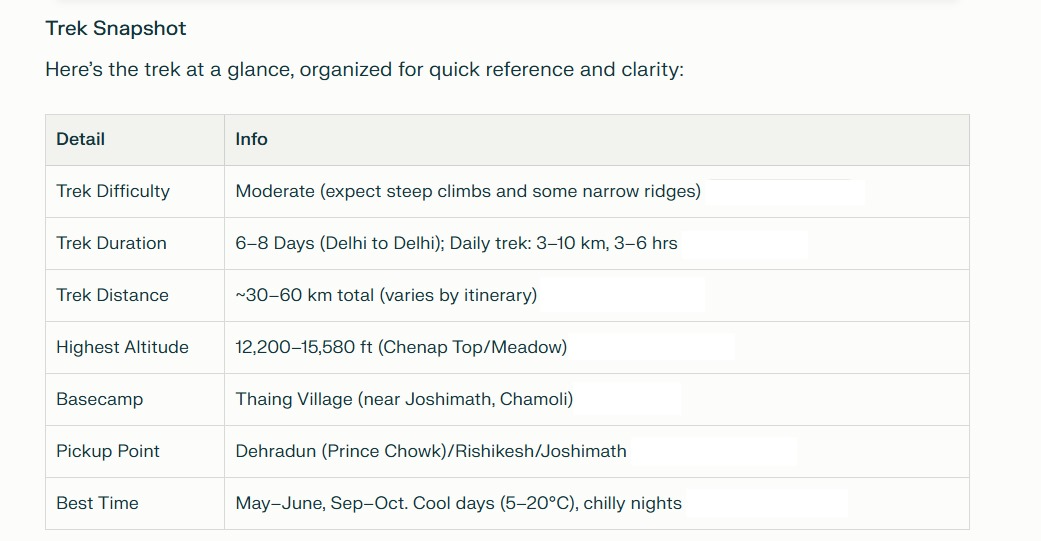
Let me give you a quick overview of what to expect on the Chenap Valley Trek—think of this as your handy cheat sheet, pulled straight from my notes. I remember poring over similar details before I went, and it made everything feel less daunting.
To make it easy, here’s a simple breakdown:
- Trek Difficulty: Moderate. In practical terms, this means it’s great for fit beginners or those with some hiking experience under their belt. You’ll face steady ascents that get your heart pumping, but nothing extreme like sheer rock climbs. Expect 4-6 hours of walking per day on uneven terrain—think forest paths, meadow strolls, and a bit of steep uphill that builds character without breaking you. If you can handle a daily workout and enjoy being outdoors, you’ll thrive here. Just listen to your body and pace yourself.
- Trek Duration: About 8-9 days total from Delhi back to Delhi, including travel time. The actual trekking spans 4-5 days, with 4-6 hours of walking each day. This gives you buffer for rest, acclimatization, and soaking in the views—I wouldn’t rush it; the valley deserves your full attention.
- Trek Distance: The Chenap Valley Trek distance is approximately 20-25 km of pure trail time, but with side explorations, it feels even more immersive.
- Basecamp: The trek kicks off from Thaing Village, a quaint, secluded hamlet perched on a hillside opposite Joshimath. It’s got this peaceful, rustic vibe—think stone houses, friendly locals tending to their farms, and kids playing in the fields. Staying here feels like stepping into a simpler time, with the Alaknanda River rushing below.
- Highest Altitude: You’ll reach up to about 4,050 meters (around 13,300 feet) at Sona Sikhar or the upper meadows. The main Chenap Bugyal sits at 3,048 meters (about 10,000 feet), so altitude is a factor, but gradual gains help with acclimatization. I felt a bit winded at first, but the fresh air soon had me energized.
- Pickup Point: Usually from Joshimath or Dehradun’s bus stand/railway station. Most groups assemble in Rishikesh or Haridwar first, then head up. If you’re coming solo, aim for Dehradun as your entry point—it’s well-connected.
- Best Time: Hands down, May-June and September-October. These shoulder seasons mean wildflowers in full bloom during summer (May-June), with clear skies and minimal rain, or crisp autumn colors and golden light in September-October. Chenap Valley temperature ranges from a comfortable 15-25°C (59-77°F) during the day in these months, dropping to 5-10°C (41-50°F) at night—pack layers! Avoid monsoon (July-August) for slippery trails and winter (December-February) unless you’re craving snow, as paths can get buried.
This snapshot kept me grounded during my prep—hope it does the same for you.
A Walk Through Time: The History of Chenap Valley Trek
Ah, the stories behind the Chenap Valley Trek—there’s something so enchanting about learning the past while your feet tread the same paths as generations before. Let me share it like I heard it around a campfire from our local guide, who grew up hearing these tales from his grandfather.
Long ago, this valley wasn’t a trekker’s dream; it was the lifeblood for the hardy shepherds of the region—the Gaddis and Gujjars, nomadic herders who roamed the Himalayas with their flocks. Imagine them, generations back, traversing these meadows in summer, driving sheep and goats up from the plains to graze on the lush bugyals. The Chenap Valley served as a vital pastoral ground, a summer haven where families set up temporary camps, weaving their lives into the rhythm of the seasons. It was also part of ancient trade routes in the Garhwal region, where locals bartered wool, herbs, and grains with neighboring villages, all while navigating the tricky passes under the shadow of Nanda Devi.
The valley’s historical significance runs deeper—it’s tied to the spiritual heart of the Himalayas. Nearby, ancient temples like those dedicated to local deities hint at pilgrimages that blended with shepherd trails. For centuries, it remained a local secret, known only to those who called the mountains home. That changed in the mid-20th century when explorers and botanists, drawn by rumors of rare flowers, started mapping the area. By the 1930s, folks like British mountaineer Frank Smythe (who discovered the nearby Valley of Flowers) sparked interest in these hidden spots, but Chenap stayed off the beaten path.
Over the decades, as trekking boomed in Uttarakhand, the Chenap Valley Trek evolved from a shepherd’s route to a beloved trail for adventurers like us. Today, it’s still pristine, thanks to limited access and eco-conscious efforts by locals to preserve it. Hearing these stories made my trek feel connected, like I was part of something timeless. It humanizes the valley, reminding you it’s not just scenery—it’s a living legacy.
Gearing Up: Your Chenap Valley Trek Cost Breakdown
Money talks, right? I remember stressing about the Chenap Valley Trek cost before I went, but breaking it down made it straightforward and way more affordable than I thought. Let’s chat transparently—based on what I paid and what groups typically charge, you can expect to budget around ₹15,000-25,000 per person for a standard package (that’s about $180-300 USD, depending on the operator and group size). This covers the essentials without skimping on safety or comfort. Here’s how it shakes out:
First, the trek package cost: Most operators include a knowledgeable guide (invaluable for navigation and stories), all meals (nutritious veg and non-veg options, from hot breakfasts to packed lunches), camping gear (tents, sleeping bags, and mats for those cozy nights under the stars), and any necessary permits (Uttarakhand forest entry is usually ₹150-200). It might run ₹10,000-15,000 for the core trek, excluding travel. I went with a small group, and it felt like good value—everything was organized, leaving me free to enjoy.
Then, travel cost to and from the pickup point: The Chenap Valley from Delhi adds ₹2,000-4,000 round-trip. An overnight bus or train to Dehradun/Rishikesh is ₹500-1,000 one way, then a shared taxi or bus to Joshimath (about 250-300 km, 8-10 hours) for another ₹1,000-2,000. I took the train to Haridwar and a shared jeep up—scenic and budget-friendly. Flights to Dehradun are pricier (₹3,000-5,000) but save time if you’re short on days.
Mandatory gear rental cost: If you don’t own trekking basics, rentals are cheap—₹1,000-2,000 for the trip. Things like sturdy boots (₹300/day), a backpack (₹200), and a sleeping bag liner (₹100). I rented poles and a rain jacket; it was a lifesaver without the hassle of buying new.
Miscellaneous personal expenses: Budget ₹2,000-3,000 for extras like snacks, tips for porters (₹500-1,000 total, well-deserved), souvenirs from Thaing Village, or emergency stuff. Water bottles and chocolates add up, but they’re worth it for those energy boosts.
Tips to budget effectively? Book with a reputable operator early for discounts, share taxis to split costs, and pack light to avoid porter fees (though they’re only ₹500-800/day if needed). Opt for off-peak (like early September) for lower rates. I came in under budget by planning ahead, and it let me splurge on that post-trek thali in Joshimath. Trust me, the memories are priceless.
How to Reach Chenap Valley Trek?
Getting to the Chenap Valley Trek was half the adventure for me—winding roads hugging the Alaknanda River, with mountains unfolding at every turn. I’ll walk you through it step by step, starting from Delhi, just like I did. It’s straightforward if you plan a bit, and I threw in some hints from my trip to make it smoother.
Step 1: From Delhi to Dehradun or Rishikesh. Hop on an overnight bus (₹500-800, 6-7 hours) or train (like the Shatabdi, ₹600-1,000, 5 hours) from Delhi’s ISBT Kashmiri Gate or New Delhi station. I chose the bus for its flexibility—book in advance via apps like RedBus, especially on weekends. Aim to arrive by morning so you can rest. If flying, Jolly Grant Airport in Dehradun is ₹2,000-4,000 from Delhi (1 hour flight).
Step 2: Dehradun/Rishikesh to Joshimath. From Dehradun bus stand or Rishikesh (if you stopped there for the Ganga vibes), grab a shared taxi or GMOU bus to Joshimath (about 250 km, 8-10 hours, ₹800-1,500). The road is stunning—passes through Devprayag and Rudraprayag—but can be bumpy, so motion sickness pills are a friend. Shared taxis are best found at the Dehradun bus stand; haggle a bit, and go early (6-7 AM) to beat traffic. I shared with a group of trekkers and made instant friends.
Step 3: Joshimath to Thaing Village (Basecamp). This is a 18-20 km drive (1-2 hours, ₹500-800 by shared jeep). The last 10 km might be on rough roads, so it’s motorable but hold on tight. From Thaing, the trek begins on foot. Total from Delhi: 9-12 hours travel time, so start a day early.
Helpful hints: Carry snacks for the drive, as stops are basic dhabas. Check road conditions via local apps or your operator—landslides can happen in rain. If driving yourself, it’s doable but tiring; I wouldn’t recommend it for first-timers. Once there, the real magic starts—breathe deep and dive in!
Conquering the Trail: Difficulty Level of Chenap Valley Trek
Let’s be real about the Chenap Valley Trek difficulty—it’s moderate, which means it’s approachable but demands respect. I wasn’t scared off by it, and neither should you be; it’s empowering when you prepare right. Is it suitable for beginners? Absolutely, if you’re reasonably fit and have some walking experience. No prior high-altitude treks needed, but if you’ve done urban hikes or gym sessions, you’ll adapt well. Our group had first-timers, and with steady pacing, everyone made it.
The challenging parts? The altitude gain is gradual—from 1,800m at Thaing to 3,000m+ at Chenap Bugyal—but days 2-3 have steep ascents through forests (about 800-1,000m elevation over 6 km), which can leave your legs burning. Terrain-wise, it’s a mix: easy meadow walks that feel like strolling through a garden, dense forest trails with roots to watch, and a few river crossings via logs or shallow wades (wear grippy shoes!). No technical sections like rappelling, but expect uneven paths and possible mud after rain.
What I loved was how it builds you up—the views from ridges make the effort worthwhile. To self-assess: If you can walk 10-15 km on varied ground without issues and handle 5-6 hours daily, you’re good. Prepare by doing stair climbs or loaded walks. Hydrate, eat well, and chat with your guide about any concerns. It didn’t scare me; it challenged me just enough to feel accomplished. You’ve got this—focus on the journey, not the hurdles.
Packing Your Journey: Things To Carry To Chenap Valley Trek
Packing for the Chenap Valley Trek felt like a puzzle at first, but once I understood the why behind each item, it clicked. The key is versatility for changing weather and terrain—light but prepared. I’ll break it down by category, explaining why each matters, so you don’t overpack like I almost did.
Essential Clothing: Layering is your best friend for the variable Chenap Valley temperature—warm days, chilly nights. Start with moisture-wicking base layers (t-shirts and thermals) to stay dry during hikes. Add a fleece jacket for insulation, and a waterproof windproof outer shell for sudden showers. Quick-dry pants or shorts for lower trails, plus woolen socks and a hat. Why? The temp swings from 20°C daytime to near-freezing at night, and layers let you adjust without bulk. I swear by merino wool—it kept me comfy without smelling after days.
Trekking Gear: Invest in sturdy trekking shoes with good grip for rocky paths and streams—blisters are no fun mid-trek. A 40-50L backpack (with rain cover) to carry your day’s essentials, and adjustable trek poles for stability on ascents (they saved my knees!). A sleeping bag rated to 0°C if not provided, and a mat for extra cushion. Why? The terrain is uneven—poles prevent slips, and a solid pack distributes weight to avoid back strain. Rent if buying’s too much; I did, and it was perfect.
Personal Utilities: High-SPF sunscreen and lip balm to combat the intense UV at altitude (you burn faster up there). A headlamp with extra batteries for early mornings or camp evenings, plus sunglasses for glare off snow patches. Toiletries like wet wipes, hand sanitizer, and biodegradable soap—water’s precious. Why? The sun’s brutal even on cloudy days, and headlamps ensure you don’t stumble in the dark. I forgot lip balm once; chapped lips aren’t worth it.
Mandatory Personal Medical Kit: This is non-negotiable—it’s for your safety and the group’s peace of mind. Pack pain relievers (ibuprofen for headaches or soreness), blister bandages and moleskin (trails are tough on feet), antiseptic cream for cuts, and anti-diarrheal meds. Include Diamox for altitude sickness (consult a doc first), plus bandages, tweezers, and any personal prescriptions. Why? Remote areas mean no quick pharmacies; better safe than sidelined. I carried a basic kit and never needed it, but knowing it was there let me relax. Share with your group, but have your own.
Pack light—aim for 8-10 kg—and test your bag on a practice hike. It made my trek worry-free.
Conclusion
As I sit here reminiscing, I can almost hear the crackle of the campfire in Chenap Bugyal, stars twinkling like diamonds above, sharing laughs with new friends over steaming mugs of chai. The Chenap Valley isn’t just a trek; it’s a soul-stirring escape where the camaraderie builds bonds, the sense of accomplishment washes over you like the morning mist, and every step reminds you of nature’s incredible power. That feeling of standing atop a ridge, wind in your hair, peaks stretching endlessly—it’s magic that’ll stay with you forever.
So, my friend, what are you waiting for? Take that leap—do your prep, gather your gear, and head into the heart of the Himalayas. The Chenap Valley Trek awaits, ready to transform you. Book your spot, lace up those boots, and let’s make some stories. You’ve got everything you need right here; now go create your own adventure. Safe travels—I can’t wait to hear how it goes!