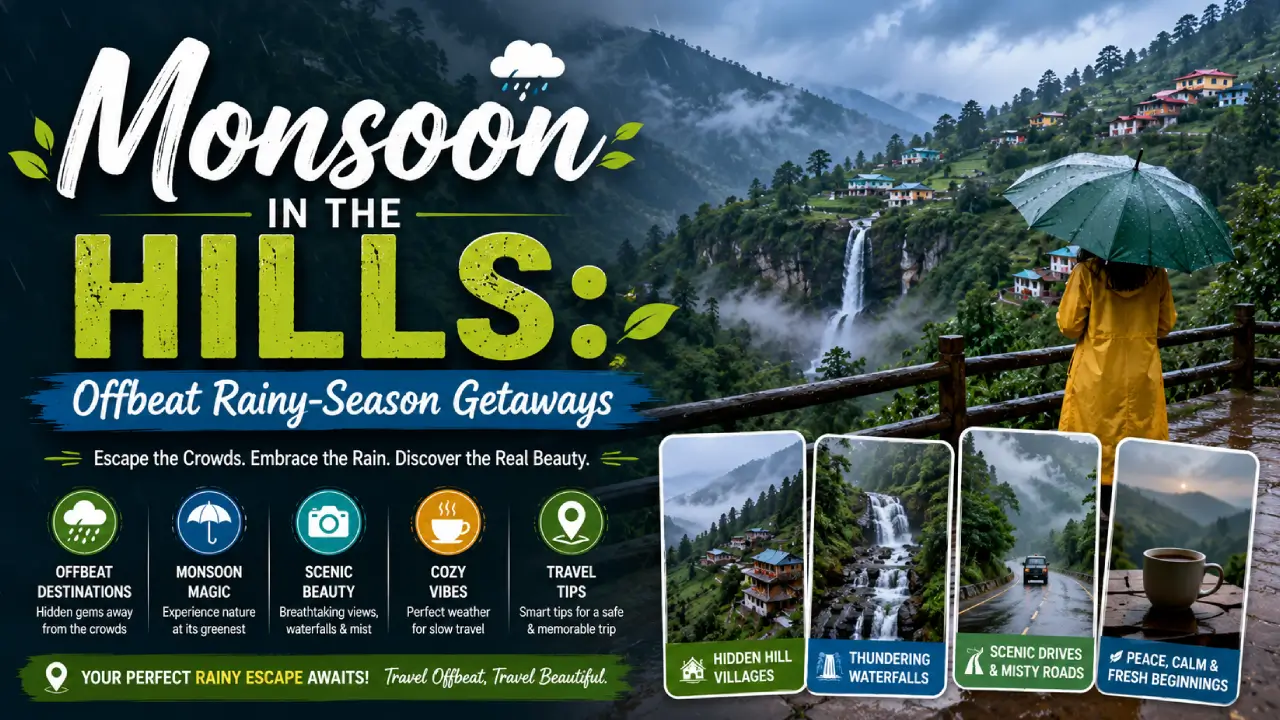
The Sound of Rain on Tin Roofs
There’s a smell that arrives just before the first monsoon shower hits dry mountain earth — petrichor, the mountains call it their own kind of perfume. Clouds don’t stay in the sky here; they roll down through pine forests and settle into valleys, turning familiar roads into something dreamlike. Waterfalls that were shy trickles in April become thunderous, and every leaf seems to have been repainted in a deeper, wetter green.
Most travelers avoid the hills during monsoon. Slippery roads, unpredictable weather, the risk of landslides — the hesitation is understandable. But here’s the secret that slow travelers and photographers have known for years: monsoon in the hills is, quietly, one of the best times to travel. The crowds evaporate, prices drop, and the landscape reveals a version of itself that summer tourists never get to see. If you’re willing to travel a little smarter, the rain rewards you generously.
This guide is for the city dwellers craving mist through pine trees, the peace-seekers who want a hillside cafe to themselves, and anyone ready to trade a predictable summer vacation for something rawer and more atmospheric.
Why Choose Offbeat Hill Stations in Monsoon?
The appeal of offbeat monsoon destinations comes down to three things most travelers don’t expect until they experience it firsthand.
Fewer crowds, more space to breathe. The hill stations that overflow with tourists in May and June go remarkably quiet in July and August. You can walk into a cafe without a wait, find a homestay without booking three months in advance, and actually hear the rain instead of a parking lot full of honking cars.
Better prices, better value. Off-season rates apply almost everywhere — accommodation, local transport, even guided experiences often come at a noticeable discount, making monsoon travel considerably kinder on the wallet.
Landscapes you simply can’t see any other time of year. Monsoon transforms mountain regions completely. Streams swell into waterfalls, terraced hillsides turn an almost electric green, and low-hanging clouds create a sense of scale and drama that dry-season photography rarely captures. For a sense of just how dramatic this transformation can be, it’s worth exploring the full extent of the monsoon magic in Uttarakhand, where entire valleys shift character with the season’s first heavy rains.
Curated Offbeat Monsoon Getaways
Landour or Kanatal, Uttarakhand: Quiet Above the Clouds
Just above the bustle of Mussoorie sits Landour, a former cantonment town where mist-covered walking paths, old stone cottages, and secondhand bookshops replace the commercial chaos below. During monsoon, Landour’s narrow lanes disappear into fog by late afternoon, and its handful of cozy cafes become the perfect spot to watch rain streak down window panes with a hot cup of ginger tea in hand.
For something even quieter, Kanatal — a small hamlet further along the ridge — offers pine-forest walks and misty hills with barely a tourist in sight. Both destinations trade Mussoorie’s crowds for a genuinely contemplative monsoon experience.
Shoja or Jibhi, Himachal Pradesh: Wooden Cottages and Waterfalls
Tucked into Himachal’s Tirthan Valley, Shoja and Jibhi have become quiet favorites among travelers seeking rustic charm over resort luxury. Wooden cottages perched on hillsides overlook apple orchards heavy with monsoon rain, and short walks lead to waterfalls that roar to life this time of year. The valley’s slower pace and riverside trails make it ideal for travelers who want their rainy-season escape to feel unhurried and lived-in rather than ticked off a checklist.
Coorg or Wayanad, Western Ghats: Coffee, Downpours, and Endless Green
Down south, the Western Ghats offer an entirely different monsoon character. In Coorg, coffee plantation stays let you fall asleep to the sound of heavy rain on estate rooftops, waking up to mist rolling over rows of coffee shrubs. In Wayanad, dense forest trails and stream crossings turn every walk into a small adventure, with waterfalls at near-peak flow and the air thick with the smell of wet earth and cardamom. If the Himalayas represent misty solitude, the Western Ghats during monsoon are lush, dramatic, and almost tropical in their intensity.
Adventure in the Rain: Trekking Green Landscapes
Not every monsoon traveler wants to sit still with a cup of tea — some want to move. For those chasing motion rather than stillness, monsoon transforms high-altitude meadows and valley trails into something genuinely spectacular. Wildflowers bloom across alpine meadows, rivers run high and vivid, and forest trails turn a saturated, almost unreal green.
That said, monsoon trekking demands real caution and route knowledge — this isn’t the season for improvising a trail. If you’re an adventure enthusiast looking to combine movement with monsoon magic, it’s worth studying dedicated monsoon treks in Uttarakhand that cover which trails remain genuinely safe during the rains, along with the specific precautions each route demands. Going in informed is the difference between an unforgettable hike and an avoidable emergency.
Essential Monsoon Survival & Packing Guide
Chasing rain-washed valleys and misty hills is deeply rewarding — but only if you travel prepared. Keep this checklist close:
- Track conditions in real time — check landslide alerts and local weather warnings the morning of departure, not just the week before.
- Prioritize travel safety in rainy season by building buffer days into your itinerary for potential road blocks, delays, or sudden closures.
- Wear high-grip, waterproof footwear — monsoon trails are slick, and in forested regions, appropriate footwear also helps manage leeches.
- Protect your electronics — pack dry bags, ziplock pouches, and waterproof covers for cameras and phones; monsoon humidity and sudden downpours are unforgiving on gear.
- Avoid rigid, fully-booked itineraries — flexibility is your best asset when hill roads and weather don’t cooperate on schedule.
- Carry a basic first-aid and emergency kit, including a torch, power bank, and any personal medication, especially if heading into offbeat or low-connectivity areas.
Conclusion: Let the Rain Lead the Way
The hills in monsoon aren’t for everyone — and that’s exactly the point. For travelers willing to trade predictability for atmosphere, and a packed itinerary for a slower, mistier pace, the rewards are extraordinary: quiet cafes, rain-washed valleys, waterfalls at full roar, and landscapes that simply don’t exist in any other season. Pack smart, stay flexible, and let the clouds set the itinerary.
What is your absolute favorite hill station to watch the rain? Are you planning an escape this season? Let us know in the comments below!